
Urinary Tract Infection Panel
UTI Test for Painful Urination and Bladder Discomfort
What this test measures
RBC
Increased levels of red blood cells (RBC) in urine, or hematuria, can be a sign of kidney disease or urinary tract issues.
Squamous Epithelial Cells
While not indicative of a health issue, large numbers of squamous epithelial cells can suggest that the urine sample was contaminated, often by skin cells or vaginal secretions.
Transitional Epithelial Cells
An increase in transitional epithelial cells can be a sign of a urinary tract infection, as these cells line the urinary tract and can be shed into the urine in response to inflammation.
Renal Epithelial Cells
Increased numbers of renal epithelial cells in the urine can suggest a disease or injury to the kidney.
Bacteria
The presence of bacteria in the urine is a clear indicator of a urinary tract infection.
Calcium Oxalate Crystals
Calcium oxalate crystals in the urine can lead to the formation of kidney stones.
Occult Blood
Presence of occult blood can be a sign of urinary tract infections, kidney stones, or bladder infections.
Nitrite
Many bacteria that cause urinary tract infections convert nitrate, a chemical your body makes, to nitrite. Nitrite in urine usually indicates a UTI.
Leukocyte Esterase
Leukocyte esterase is an enzyme present in white blood cells. Its presence in urine suggests a urinary tract infection.
WBC
Increased levels of white blood cells (WBC) in urine often indicate an infection in the urinary tract.
Protein
Protein in the urine, or proteinuria, is often a sign of kidney disease.
Ketones
An excess of ketones in the urine can be a sign of diabetes, specifically diabetic ketoacidosis, a serious complication.
Bilirubin
Bilirubin in the urine may indicate liver disease or damage.
Glucose
Presence of glucose in the urine, or glucosuria, can indicate poorly controlled or untreated diabetes.
pH
An acidic urine pH can increase the risk of uric acid kidney stones, while an alkaline urine pH can increase the risk of calcium or phosphate kidney stones.
Specific Gravity
High specific gravity can indicate dehydration or kidney disorders, while low specific gravity can be indicative of kidney failure or excessive fluid intake.
Appearance
A dark, concentrated urine may suggest dehydration.
Color
A dark, concentrated urine may suggest dehydration.
Crystals
Certain types of crystals in the urine can lead to kidney stone formation.
Amorphous Sediment
Amorphous sediment in the urine could be a sign of dehydration, as it is often seen in concentrated urine.
Uric Acid Crystals
The presence of uric acid crystals in the urine can be a sign of gout, a type of arthritis caused by excess uric acid in the body.
Yeast
Presence of yeast in urine could indicate a yeast infection in the urinary tract.
Casts
The presence of any type of urinary cast can suggest kidney disease, as casts are formed in the tubules of the kidneys.
Granular Cast
Granular casts are clumps of white blood cells, red blood cells, or kidney cells. Their presence can suggest kidney disease.
Hyaline Cast
Hyaline casts are often seen in concentrated urine, which can be caused by dehydration.
Triple Phosphate Crystals
Triple Phosphate Crystals, or struvite stones, may form after a urinary tract infection and can lead to kidney stones.
Culture, Urine, Routine
Bladder infections can be caused by different types of bacteria, which can be detected in a urine culture. Symptoms can include discomfort or pain in the lower abdomen and frequent urination.
Three steps from order to answer
Order online
Purchase securely on this page. Choose your nearest Quest Diagnostics draw site at checkout. Over 2,200 locations nationwide.
Takes about 2 minutes
Get your blood drawn
Book a time at your chosen location. A standard blood draw takes about 5 minutes. Your lab order is sent automatically when you purchase.
About 5 minutes at the lab
Review your results
Results arrive in your secure online portal in 1 to 2 business days. Each marker includes a plain-English explanation and reference range, not just a number.
Results in 1 to 2 business days
Results you can actually read.
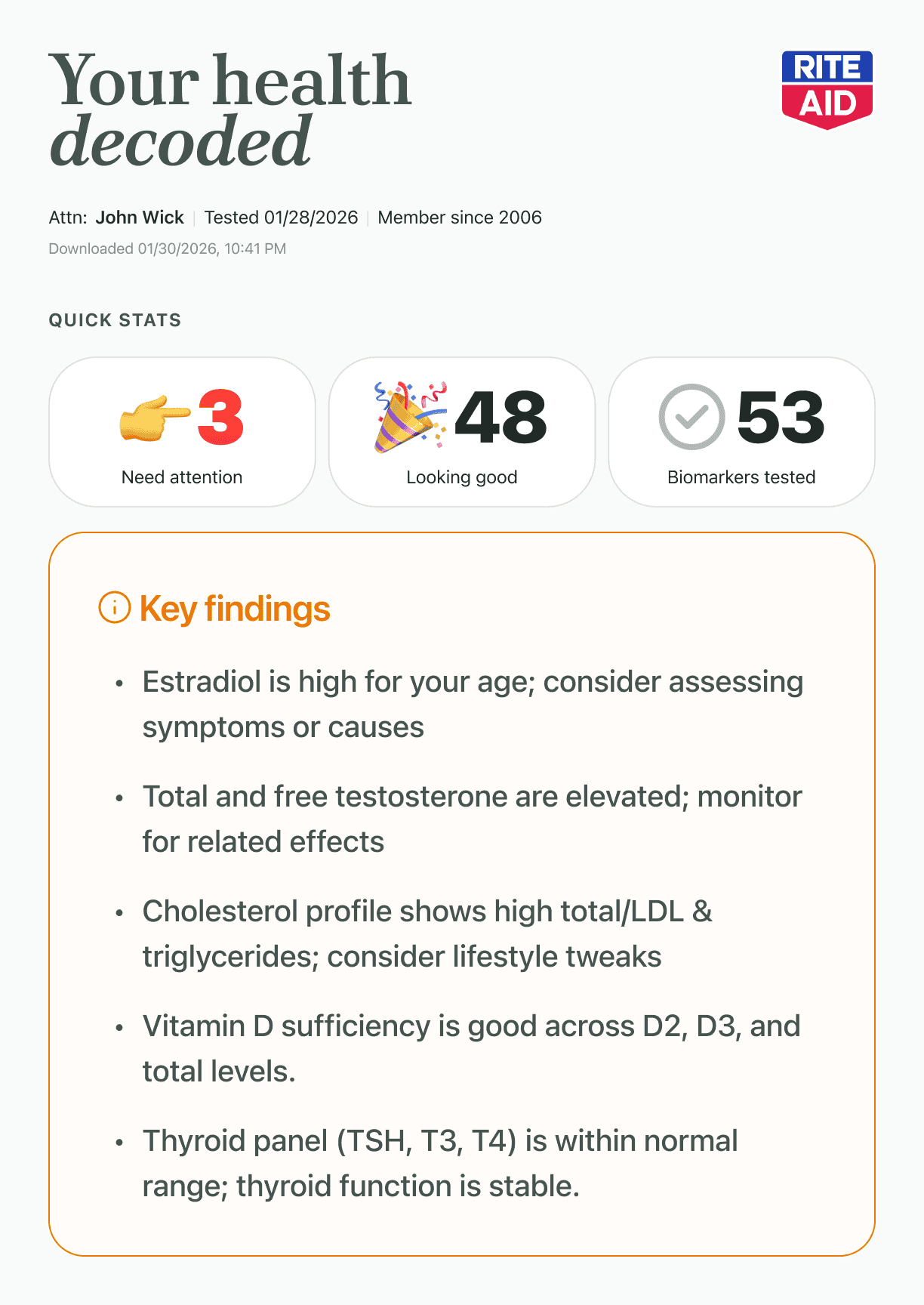
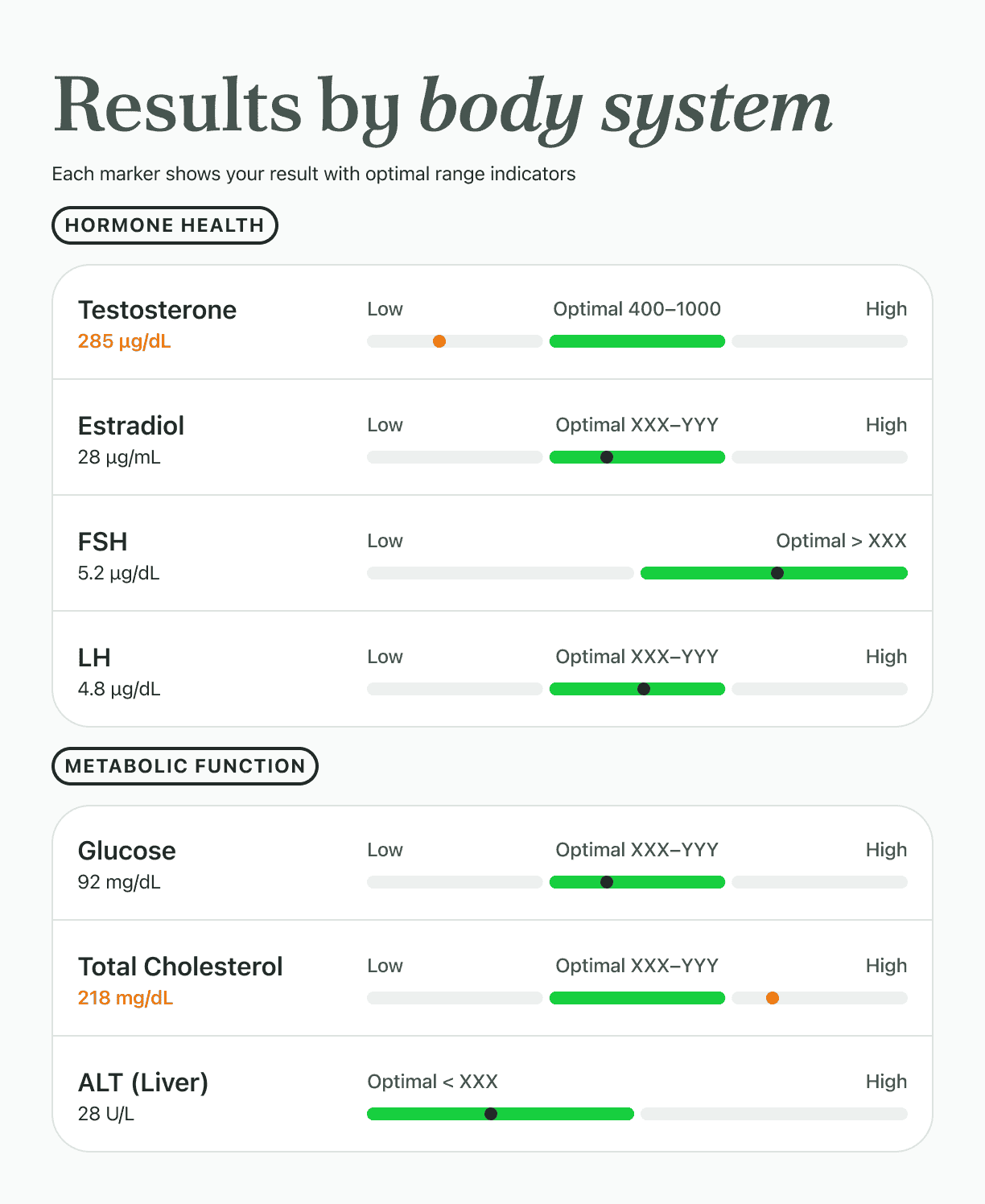
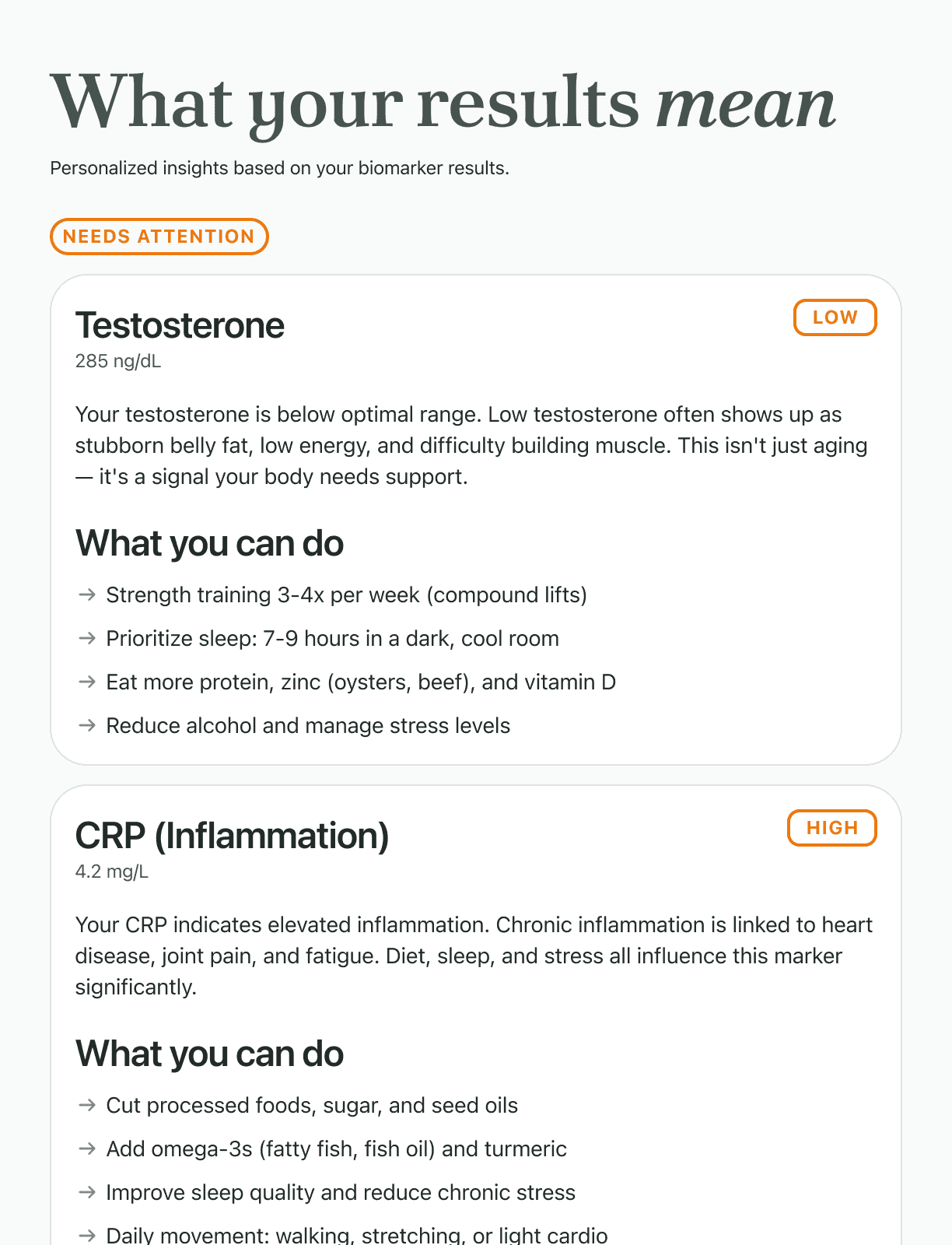
Your results aren't just a number in a table. Each marker comes with a plain-English explanation and your result highlighted against the reference range. If anything falls outside normal, you'll see a note on what that typically means.
- Reference ranges shown for every marker
- Plain-English explanations, not medical jargon
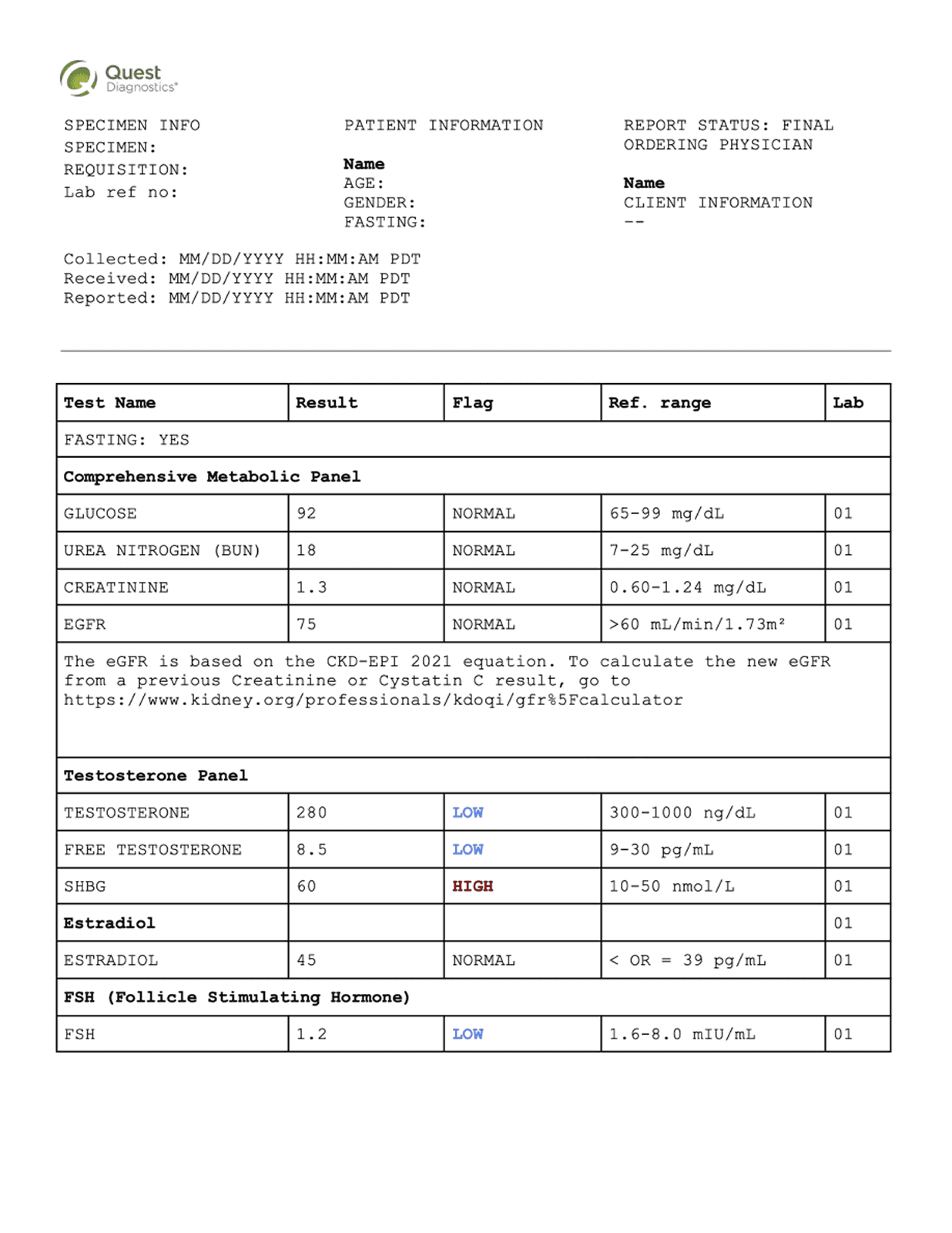
- Downloadable as a PDF to share with your doctor
- Reviewed by a licensed physician before delivery
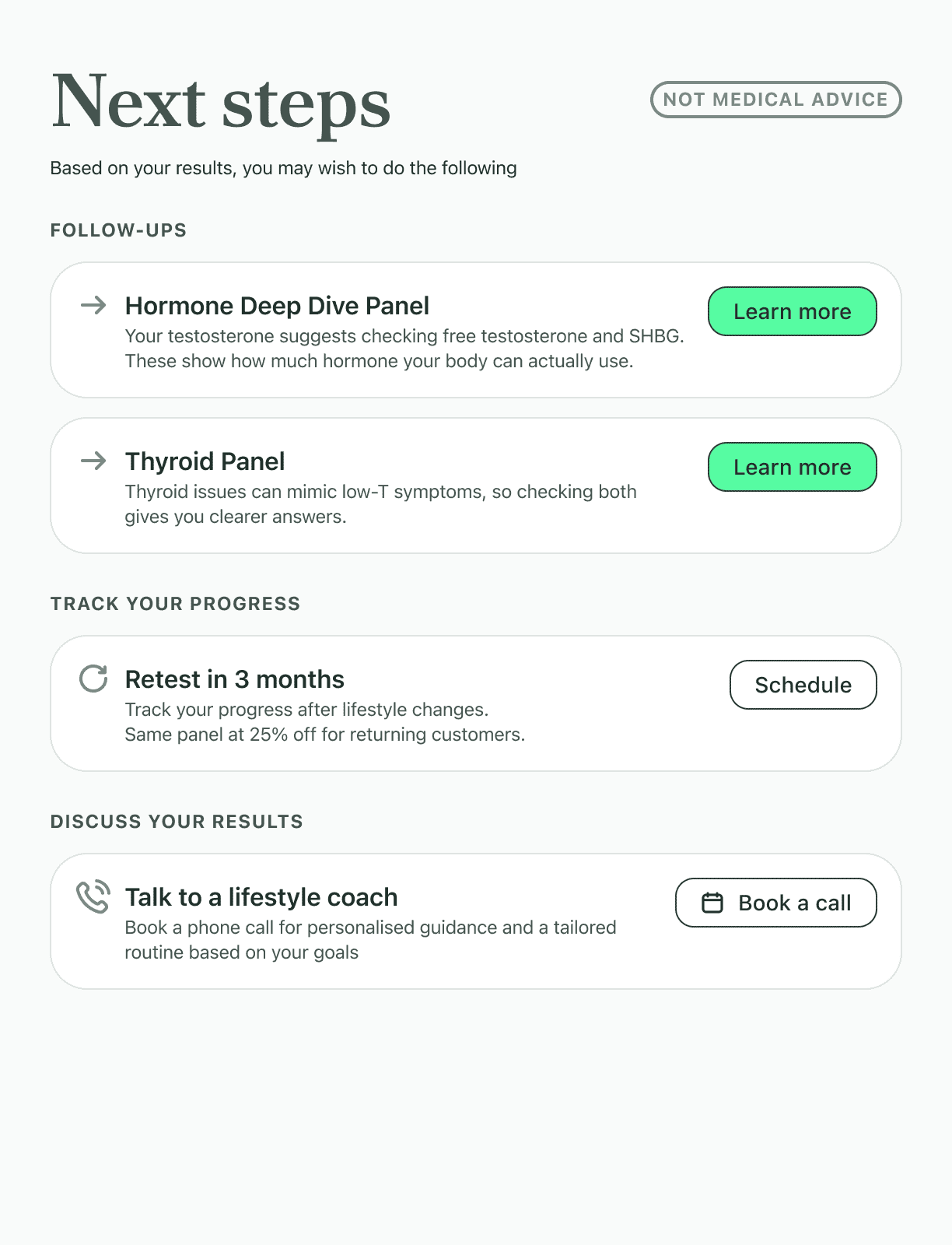
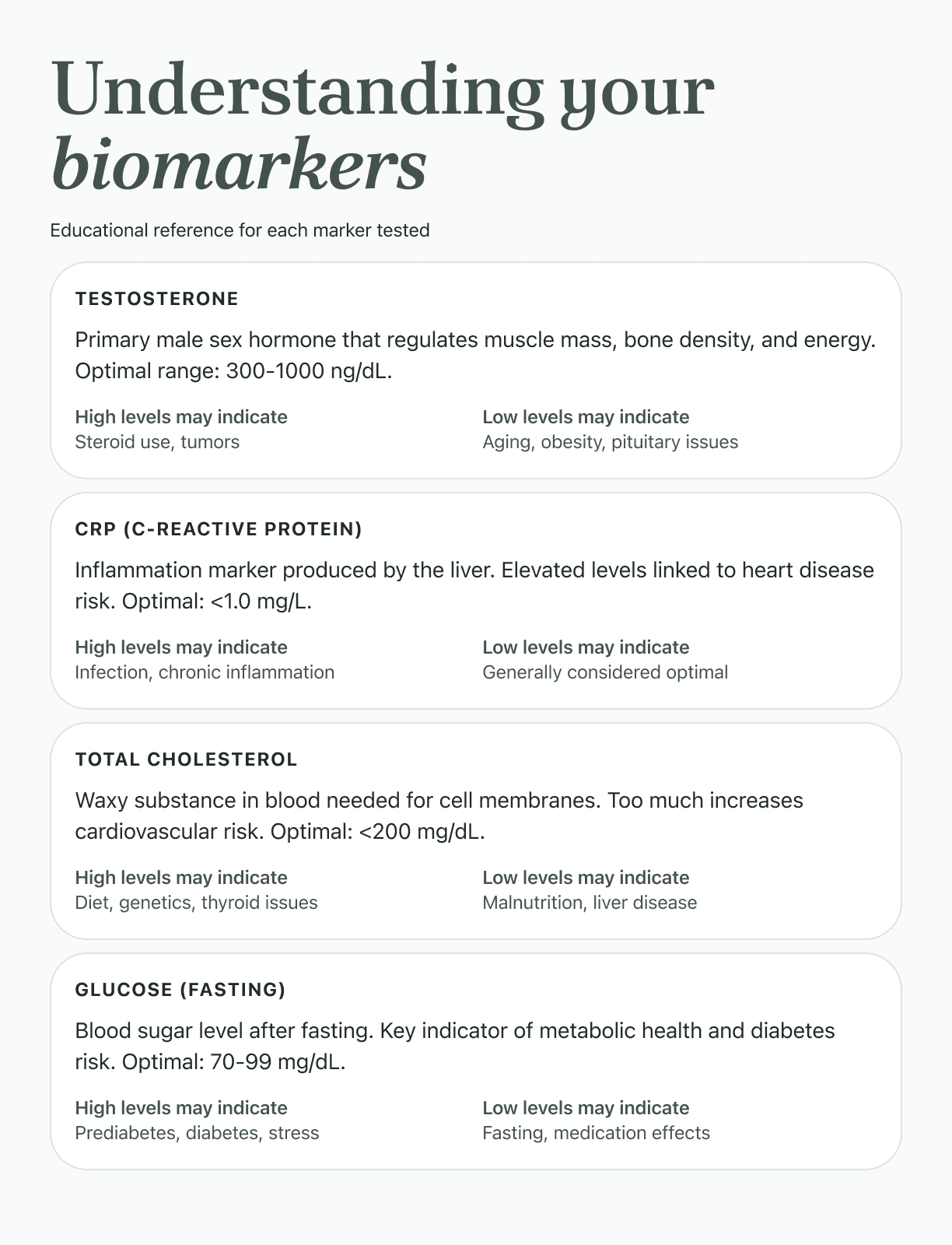
Results
what your report will look like

What makes this different from a standard doctor's visit
No doctor's visit required
All tests are physician-ordered on your behalf. You get clinical-grade diagnostics without a referral or prior appointment.
The same labs your doctor uses
Every blood draw is processed at Quest Diagnostics. The same facilities hospitals and clinics use nationwide. The science is identical. The experience is simpler.
Your results, your data
Results are private and belong to you. Download them, share with your own doctor, or keep them confidential. The choice is yours.
Physician-reviewed results
A licensed physician reviews your panel before results are released to you. If critical values are found, you'll be contacted directly.
Frequently asked questions
Text us at 863-270-9911 and we'll respond within a few hours.
No. When you purchase this test, a physician associated with our network reviews your order and issues the lab requisition on your behalf. You don't need a prior doctor's visit or referral.
This is a direct-pay test, priced to be accessible without insurance. Because you're paying directly, the cost is often lower than your insurance copay for a comparable physician-ordered panel. We provide an itemized receipt you can submit for HSA/FSA reimbursement.
The blood draw process and lab analysis are identical. Same CLIA-certified Quest Diagnostics facilities, same testing methodology. The difference is access. You order directly, skip the office visit, and get results faster.
A licensed physician reviews every panel before results are released. If any critical values are found, you'll receive a direct phone call before your results are posted. For out-of-range results that aren't critical, your results will include clear guidance on what the finding typically means and what next steps to consider.
Yes. Results are available as a PDF download from your portal. They're formatted in the standard lab report format your physician will recognize. Many people use these results to have a more informed conversation at their next appointment.
Your results are stored securely in a HIPAA-compliant system and are not shared with your insurance company, employer, or any third party without your explicit consent.